
About the Workshop
Advances in perception, learning, planning, and decision-making are bringing intelligent vehicles from controlled demonstrations to public roads, where robotaxi services are scaling up and regulators are defining requirements for automated driving and AI-based systems. In this setting, technical autonomy alone is insufficient: vehicles operate in mixed environments where their decisions directly affect pedestrians, drivers, passengers, and other autonomous agents. Their behavior must therefore be not only capable, but also safe, predictable, adaptive, and understandable. PPNIV 2027 is built around one question:
How should intelligent vehicles adapt their behavior when interacting with humans and other autonomous agents?
Adaptation has a cost. A vehicle that adapts to every road user may become harder for others to anticipate, while a vehicle that always behaves predictably leaves the burden of adaptation to humans. The workshop discusses this trade-off openly, through three guiding questions:
The contributions of speakers, authors, and attendees will be collected in a community report with a preliminary decision framework on when vehicles should adapt, preserve predictable behavior, or communicate their intent. The report will summarize key insights, supporting evidence, open challenges, and disagreements, as a starting point for future research.
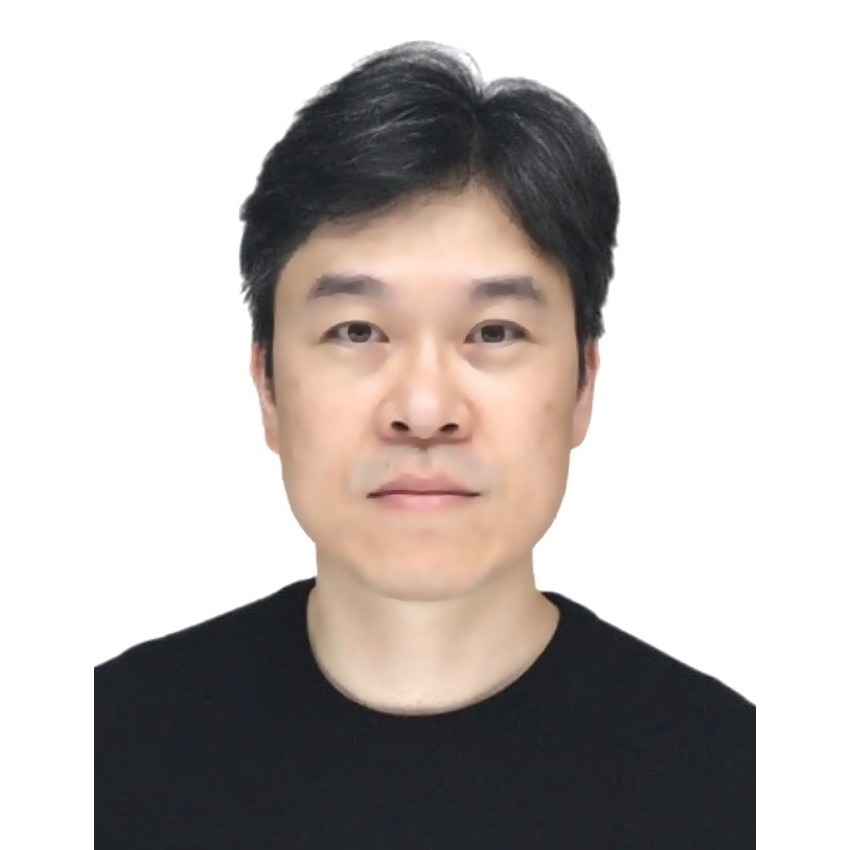
Confirmed Speakers




Program
The half-day workshop groups the five invited talks (20 min + 5 min Q&A) into two thematic sessions: Session I on how vehicles perceive and understand the humans around them (Q1), and Session II on how they adapt and earn trust (Q2–Q3). The workshop will be held in person in Seoul, South Korea.
| Time | Event | Focus |
|---|---|---|
| 08:30 - 08:35 | Welcome and opening poll (Slido) | – |
| 08:35 - 09:50 | Session I – Understanding: talks by H. Lim, K.-J. Yoon, A. Plebe | Q1 |
| 09:50 - 10:05 | Spotlights of the 5 shortlisted papers (3 min each) | Q1–Q3 |
| 10:05 - 10:35 | Coffee break with moderated poster groups | Q1–Q3 |
| 10:35 - 11:25 | Session II – Adaptation and Trust: talks by M. Pavone, J. S. Berrio Perez | Q2–Q3 |
| 11:25 - 12:25 | Round table: Who Should Adapt? Rethinking Interaction Between Humans and Intelligent Vehicles | Q1–Q3 |
| 12:25 - 12:30 | Closing and best-paper award | – |
Opening Poll and Poster Groups
The day opens with a short Slido poll: for three everyday situations (a pedestrian at an unsignalized crossing, a merge in dense traffic, and a takeover request), attendees vote on whether the vehicle or the human should adapt. The results show where the community agrees and where it is divided, and guide the round table.
During the coffee break, the posters are organized into three discussion groups aligned with Q1–Q3, each moderated by an invited speaker. Each group identifies one open research question, which a rapporteur presents at the round table. The assignment of speakers to poster groups will be announced here in advance.
Round Table: Who Should Adapt? Rethinking Interaction Between Humans and Intelligent Vehicles
The panel brings together the five invited speakers and one early-career author of a shortlisted paper, in three parts:
- What the vehicle must know. Is a learned representation of traffic enough, or do vehicles need explicit models of human intentions and attention?
- Who adapts to whom. Starting from the situations where the opening poll shows the strongest disagreement: should vehicles adapt to each road user, or behave predictably so that humans can adapt to them? Which choice leads to appropriately calibrated trust?
- Audience input and research priorities. The poster groups present their findings, the moderator brings in the most up-voted Slido questions, and each panelist names one research priority for the next five years.
Slido stays open throughout the workshop for questions and objections, which can also be anonymous. The talks and the round table will be recorded and made available online.
Call for Papers
We invite papers that address the guiding questions Q1–Q3, on topics including:
- Intention prediction and human behavior understanding
- Human-aware planning and multi-agent coordination in mixed traffic
- Shared autonomy and takeover between driver and automation
- Intent communication and external HMIs
- Trust calibration, and user-study and field-evaluation methods for trust and perceived safety
- Benchmarks for human–vehicle interaction
Early-stage ideas, unconventional views, and negative results are equally welcome.
Submission Guidelines
- Papers must follow the IEEE ICRA format and have 4–8 pages.
- Each submission must include a short Q1–Q3 abstract (at most 150 words) summarizing how the work addresses understanding, adaptation, and trust.
- Papers are non-archival: they will be posted on the workshop website and will not be part of the ICRA proceedings.
- Submission link: coming soon.
Review and Awards
Each submission will receive at least two reviews. Besides quality, originality, and relevance, reviewers will reward clear evidence from comparative studies, user studies, or field data, an open discussion of limitations, and, for claims on trust, a clear description of how it was evaluated.
All accepted papers will be presented as posters. Based on the reviews, 5 shortlisted papers will be selected for 3-minute spotlight talks, and the author of one of them will join the round table. A Best Paper Award will be assigned by the program committee based on the reviews and the spotlight presentations.
Important Dates
| Paper submission | March 15, 2027 |
| Notification of acceptance | April 12, 2027 |
| Camera-ready | April 19, 2027 |
| Workshop | May 24–28, 2027 |
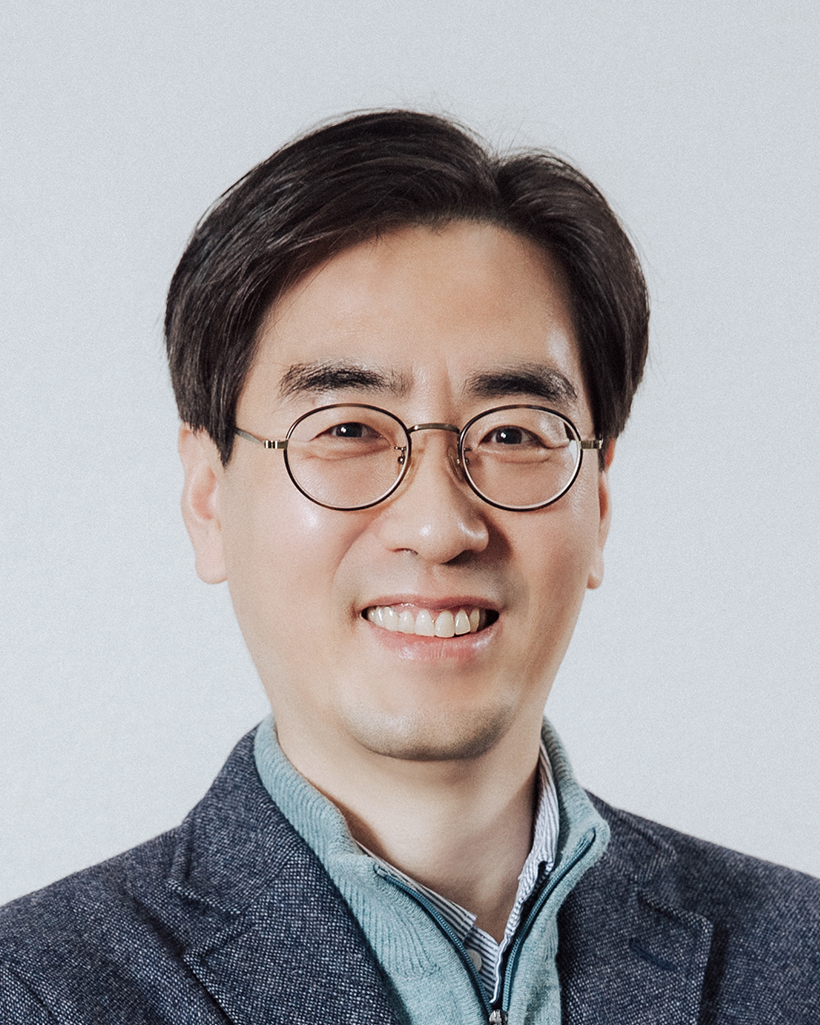
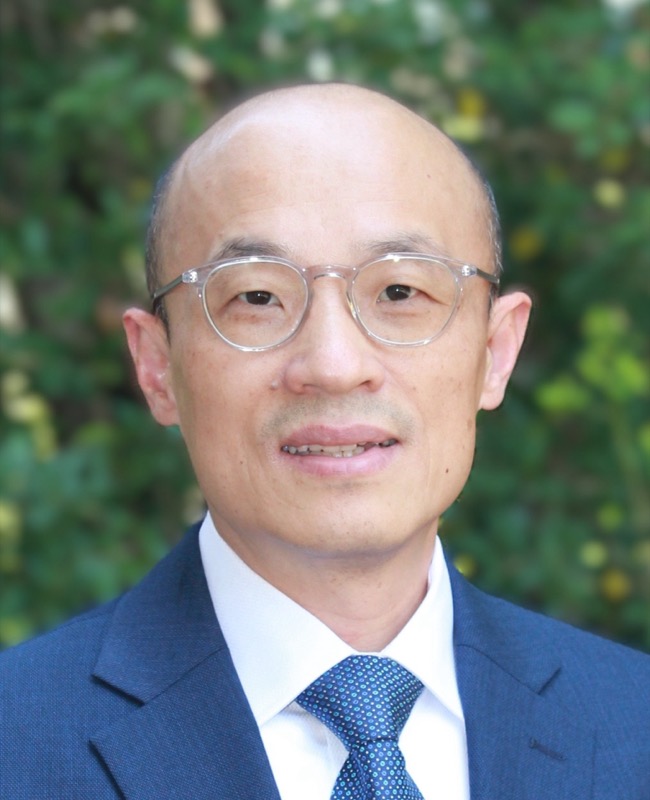
Organizers


Contact: mattia.piccinini@tum.de
This workshop is supported by the IEEE RAS Technical Committee on Autonomous Ground Vehicles and Intelligent Transportation Systems.
