
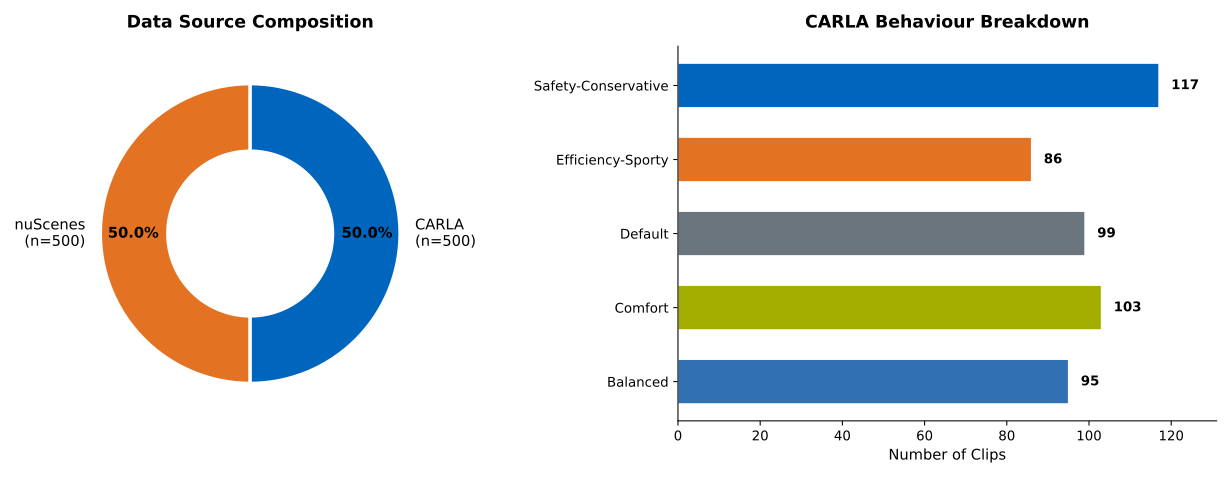
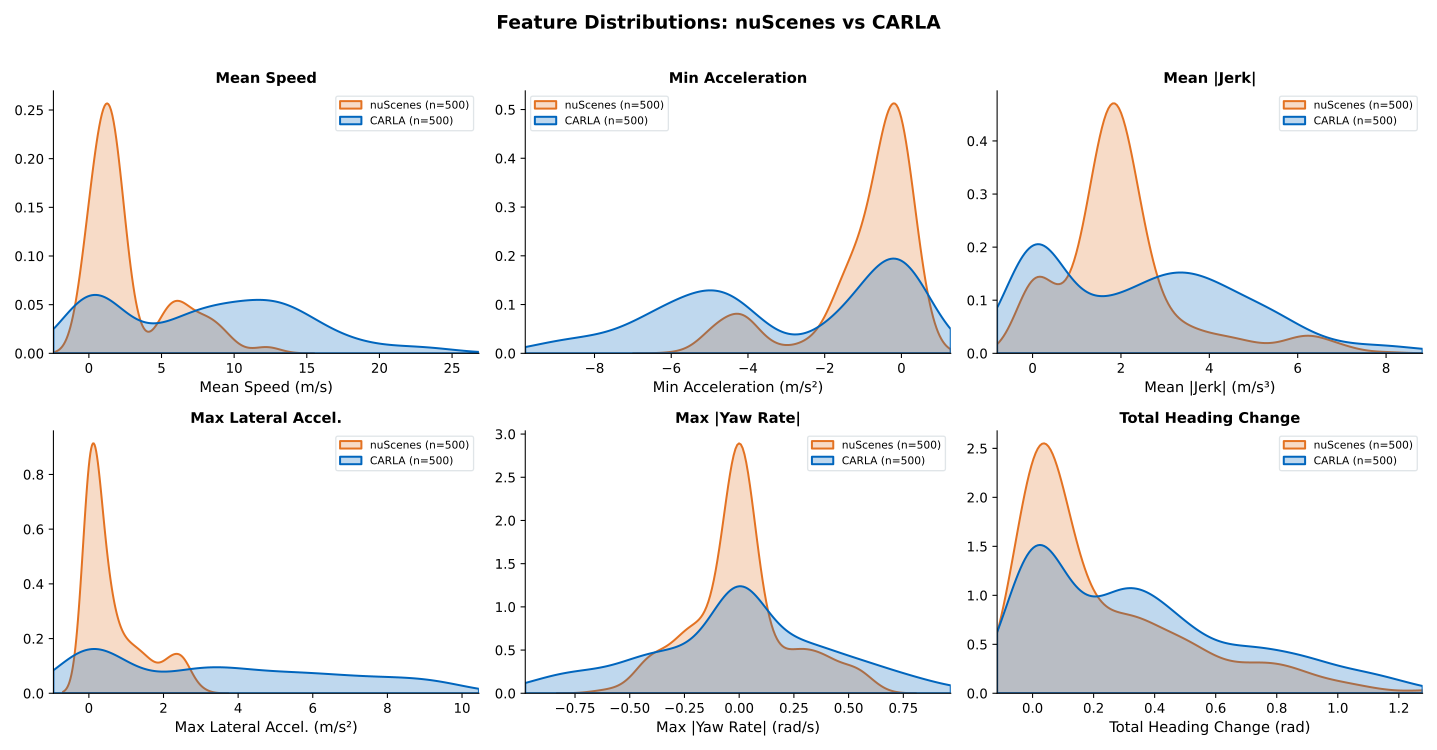
EgoDyn-Bench evaluates whether vision-language models can understand ego-vehicle dynamics from short driving clips. Each clip is 3 seconds long and paired with physics-grounded questions derived from actual trajectory data.
1,000
Driving Clips
14,000
QA Pairs
14
Question Types
500
nuScenes (real-world)
500
CARLA + Cosmos Transfer (synthetic)
Question Types
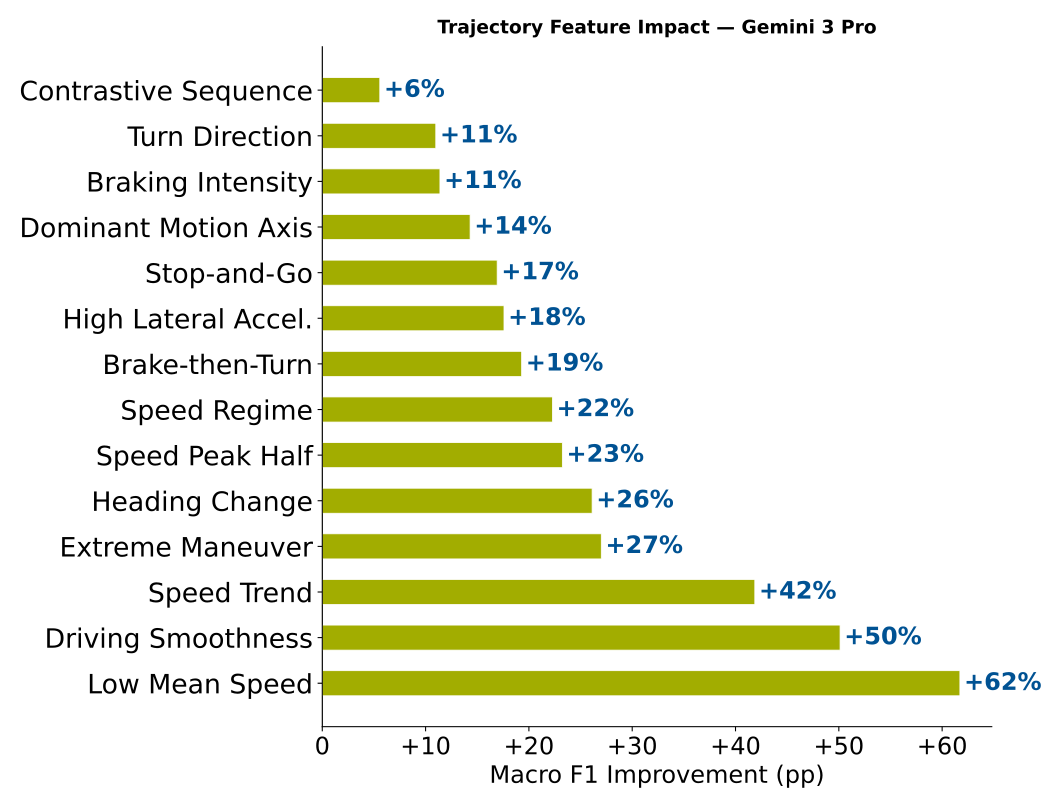
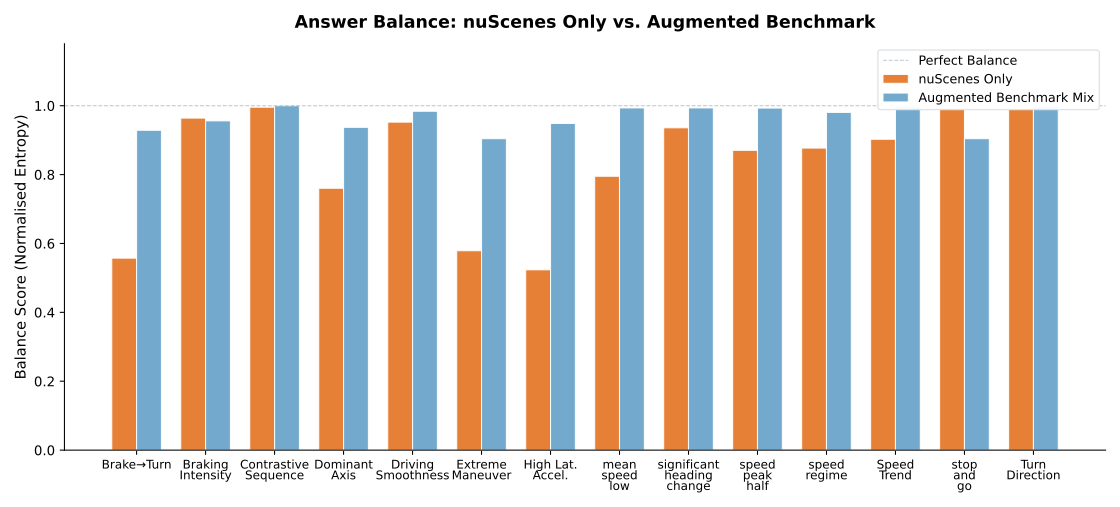
Our benchmark covers 14 question types organized into two categories, testing both direct dynamics understanding and comparative temporal reasoning.
Direct Dynamics
| Question | Prompt | Answers |
|---|---|---|
| Speed Trend | Is the vehicle accelerating, decelerating, or maintaining steady speed? | accelerating decelerating steady |
| Speed Regime | What is the vehicle's speed regime? | stopped slow urban highway |
| Low Mean Speed | Is the mean speed below 5 m/s (18 km/h)? | yes no |
| Braking Intensity | What is the intensity level of the vehicle's braking? | emergency moderate low none |
| Driving Smoothness | How smooth is the driving based on jerk? | smooth moderate aggressive |
| Dominant Motion Axis | Is the vehicle's motion primarily longitudinal or lateral? | longitudinal lateral none |
| Turn Direction | Is the vehicle turning left, right, or going straight? | left right straight |
| Heading Change | Does the vehicle change heading by more than 15 degrees? | yes no |
| High Lateral Accel. | Does the vehicle experience high lateral acceleration? | yes no |
| Extreme Maneuver | Does the vehicle perform an extreme maneuver (high jerk or hard braking)? | yes no |
| Stop-and-Go | Does the vehicle exhibit stop-and-go behavior? | yes no |
| Brake-then-Turn | Does the vehicle brake and then turn (sequential maneuver)? | yes no |
Comparative / Temporal
| Question | Prompt | Answers |
|---|---|---|
| Speed Peak Half | Does the maximum speed occur in the first or second half? | first_half second_half no_peak |
| Contrastive Sequence | Which half of the sequence has more dynamic driving? | first_half second_half similar |
Comparative questions require temporal reasoning by contrasting the first and second halves of a clip.